



Ancient Egypt Pyramids Guide
The First Pyramids
The history of the Egyptian pyramids began during the Old Kingdom period around 2700 BC. The first pyramid is considered to be the Pyramid of Djoser, also known as the Step Pyramid. It was built for Pharaoh Djoser and designed with six large stone steps. The pyramid reaches a height of about 62 meters and was one of the tallest structures in the ancient world at that time.
The Pyramid of Djoser was designed by Imhotep, a famous architect and physician who became one of the most important figures in Ancient Egypt. He introduced new building techniques that later influenced the construction of many other pyramids and ancient monuments across Egypt.
During the reign of Pharaoh Sneferu, Egyptians built one of the first smooth-sided pyramids with a more advanced architectural design. Sneferu’s pyramid is located in the Dahshur necropolis south of Cairo. It stands about 104 meters high and was built using reddish stone, which gives the pyramid its famous red color.

The Great Pyramids
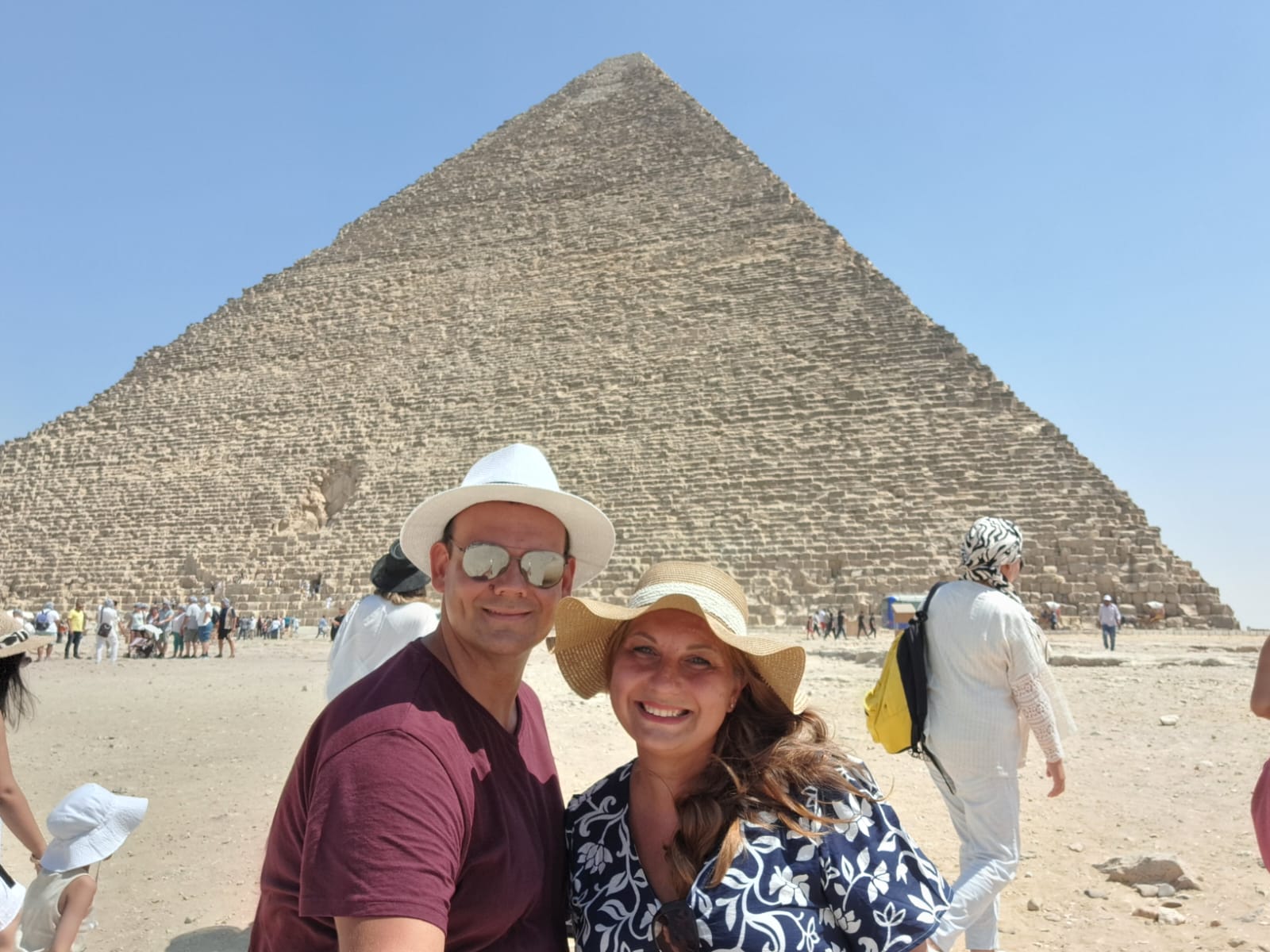
The most famous of the Great Pyramids was built for Pharaoh Khufu, the son of Sneferu, around the 26th century BC. The Great Pyramid of Khufu originally reached a height of 146 meters, although today it is slightly lower because the outer casing stones disappeared over time. Its base measures about 230 meters on each side.
The pyramid was built mainly from white limestone taken from quarries near Giza. It became famous for its incredible construction precision, with stone blocks fitted together so closely that even a thin blade could hardly pass between them.
No mummy of Pharaoh Khufu, valuable treasures, or large hieroglyphic texts were discovered inside the pyramid, which still creates mystery around its original purpose. Researchers believe the pyramid was designed with advanced astronomical and mathematical accuracy, perfectly aligned with the cardinal directions.
Another famous pyramid in Giza is the Pyramid of Khafre, built during the reign of Pharaoh Khafre in the 26th century BC. It reaches a height of about 136 meters and still preserves some of its original outer casing near the top. Inside the pyramid, archaeologists discovered corridors and burial chambers connected with the pharaoh’s tomb.
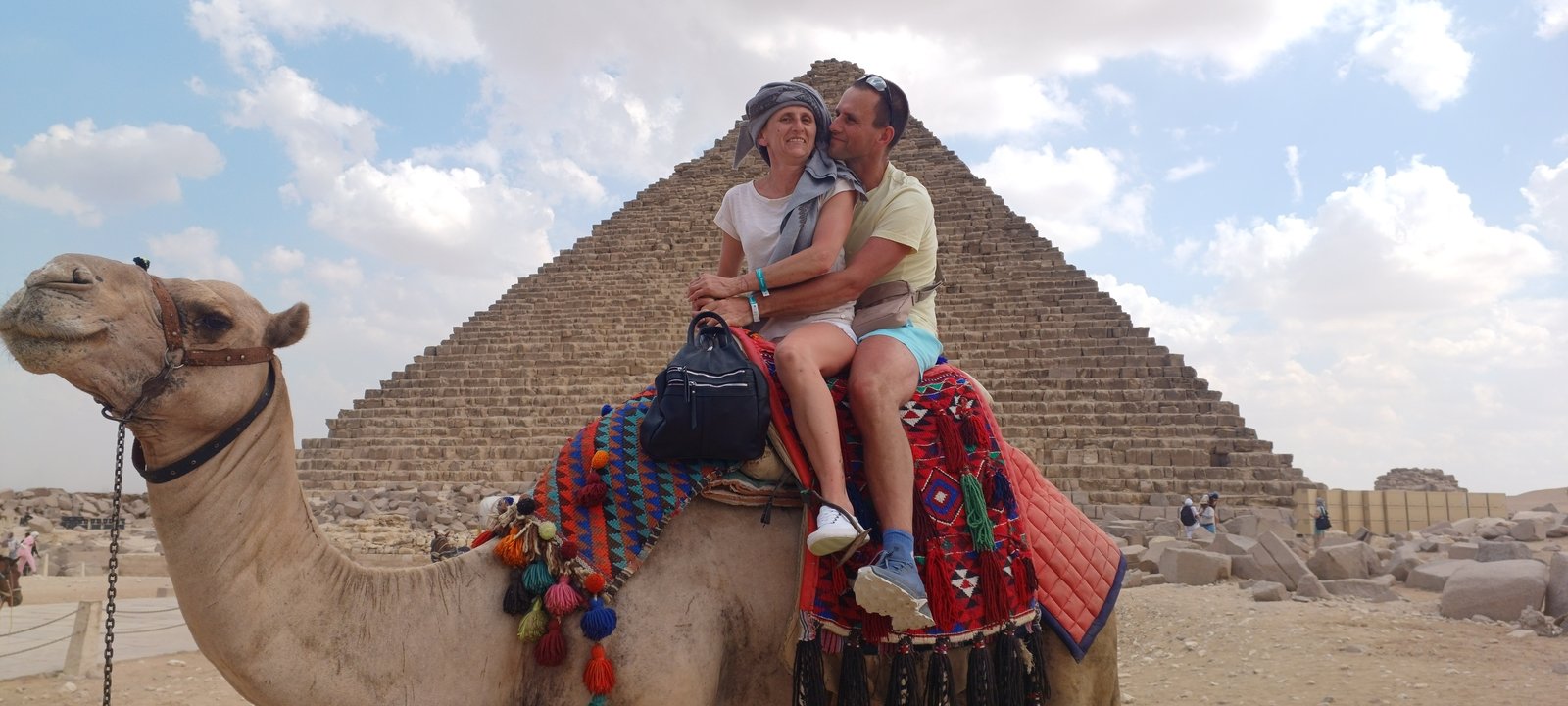
The smallest of the three Great Pyramids belongs to Pharaoh Menkaure. It stands about 65 meters high and was built using granite and sandstone blocks. Although much of its outer covering disappeared over the centuries, the pyramid remains one of the most important monuments of Ancient Egypt.
The Sphinx
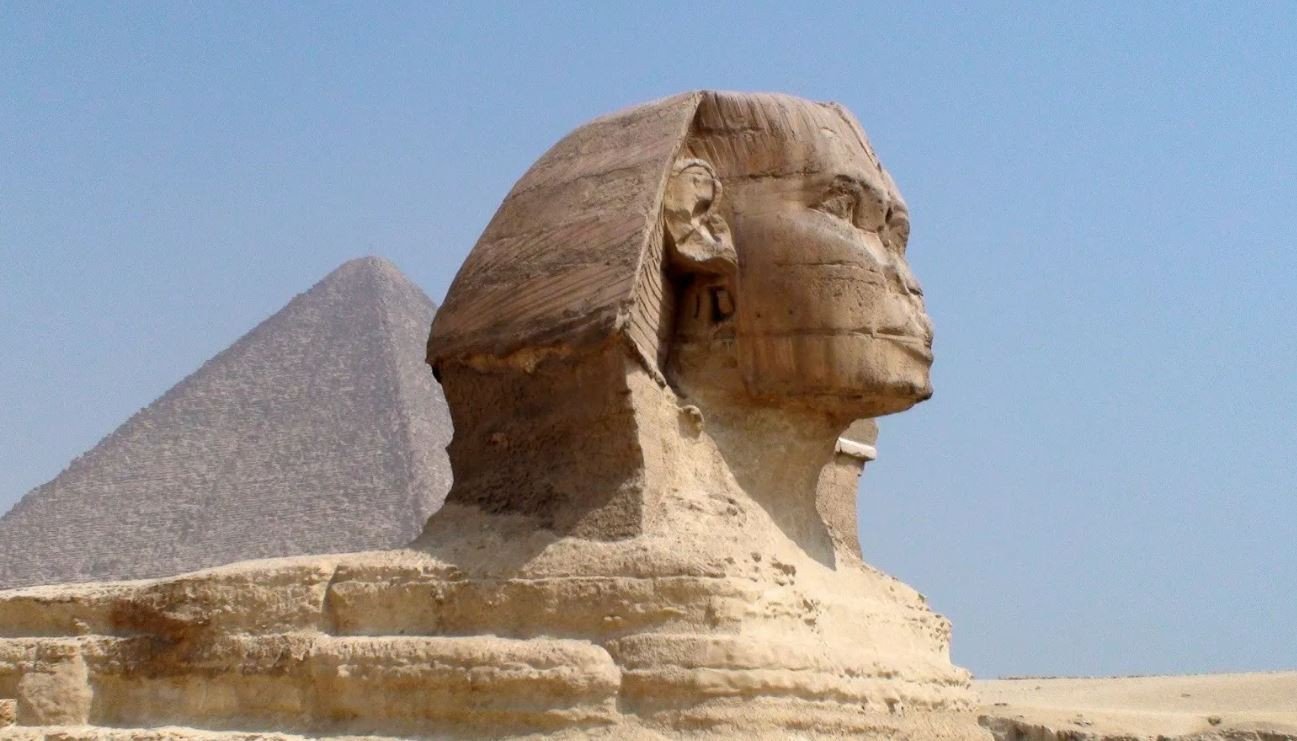
The Great Sphinx of Giza is closely connected with the famous pyramids and stands near the Pyramid of Khafre on the Giza Plateau. It was carved from a single block of limestone during the reign of Pharaoh Khafre and had an important religious and symbolic meaning in Ancient Egypt.
The Sphinx has the body of a lion and the head of a human, representing power, wisdom, and the image of the pharaoh. It is about 20 meters high and 73 meters long, making it one of the largest and most famous statues in the world.
Its location beside the pyramids shows its important connection with royal tombs, protection, and beliefs about the afterlife in Ancient Egypt.

Ancient Egypt Pyramids Guide
Pyramid Research
The study of the Egyptian pyramids began many centuries ago. Ancient Greek historians such as Herodotus and Diodorus Siculus visited Egypt and wrote some of the earliest descriptions of the pyramids and other monuments of Ancient Egypt. However, real archaeological research started much later.
Modern exploration of the pyramids became more active during the early 19th century after Napoleon’s expedition to Egypt in 1798. Scientists and engineers began making detailed measurements, drawings, and studies of the pyramids and surrounding temples.
Later, famous archaeologists including Flinders Petrie and Howard Carter continued important research in Egypt. Their discoveries helped historians better understand Ancient Egyptian civilization, royal tombs, and burial traditions. Howard Carter became especially famous after discovering the tomb of Tutankhamun.
During early archaeological expeditions, many ancient tombs and monuments were damaged or robbed by treasure hunters searching for valuable artifacts. Some explorers even used destructive methods to enter hidden chambers inside the pyramids, causing serious damage to historical sites.
Over the centuries, many Egyptian artifacts and treasures were taken out of Egypt and sold to private collectors or museums abroad. Because of this, a large part of Ancient Egypt’s historical heritage was lost forever.
Today, research on the pyramids still continues. Archaeologists, historians, and scientists use modern technology to study hidden chambers, construction methods, and the mysteries of the pyramids of Khufu, Khafre, and Menkaure. The pyramids remain one of the greatest archaeological wonders in the world and continue to reveal new secrets about Ancient Egypt.